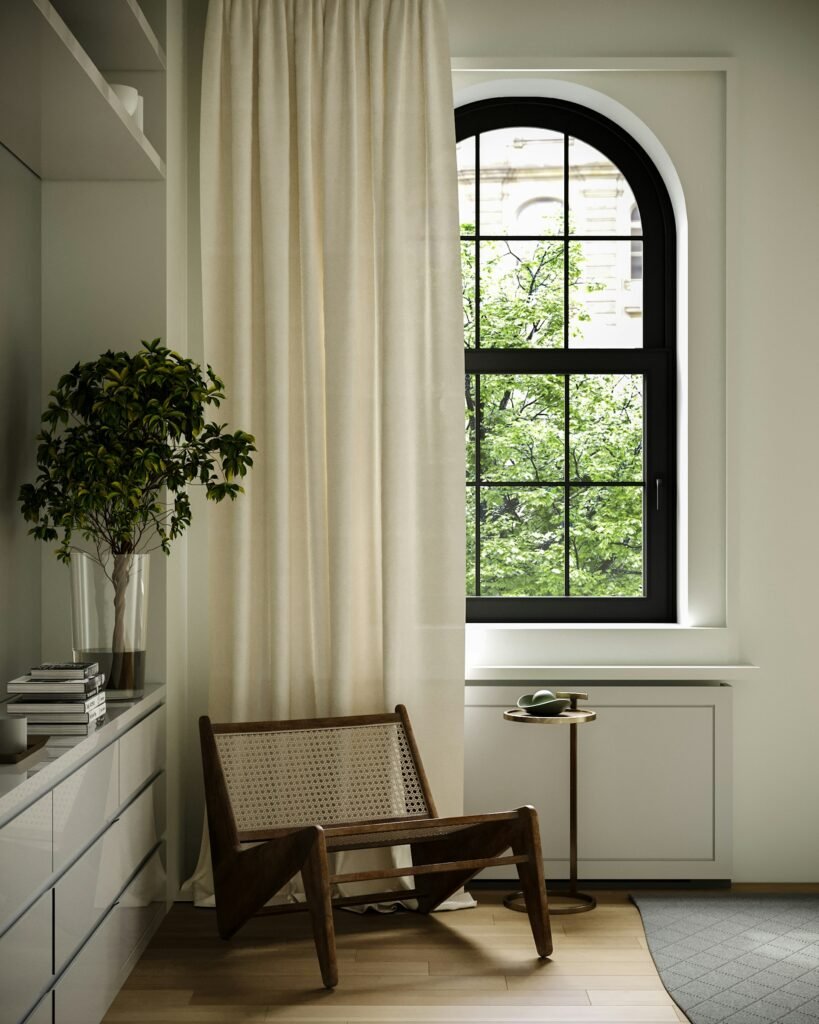
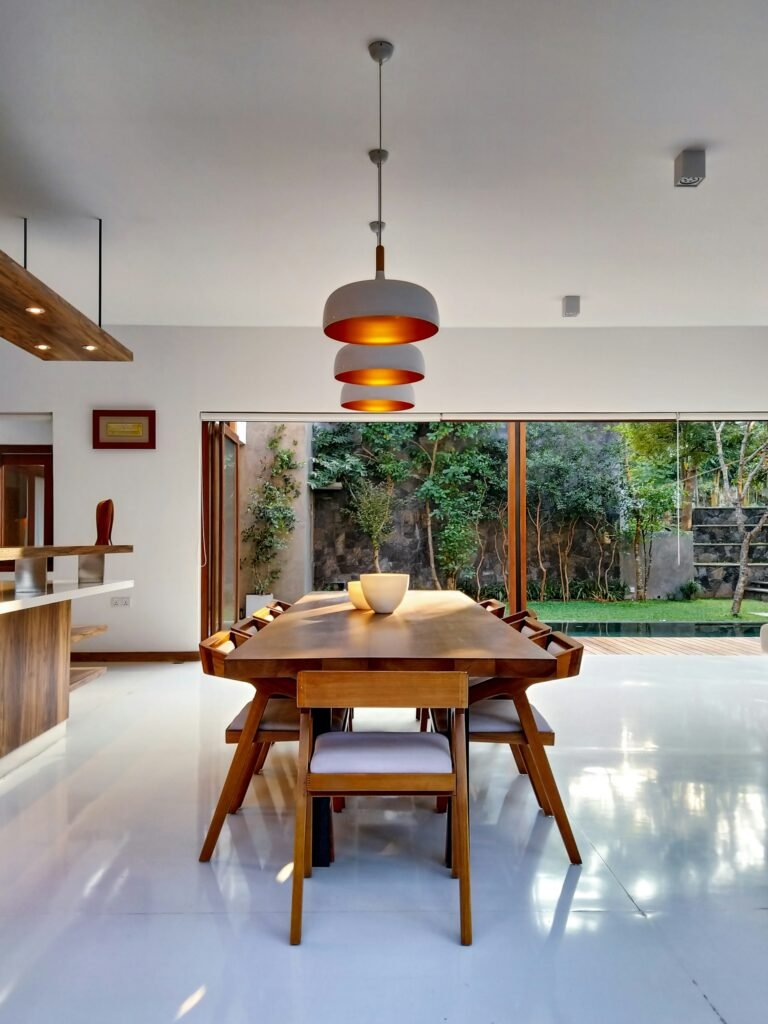
Choosing paint can somehow become a full-time job. You pick a soft white, bring it home, and suddenly it looks pink beside the floor. The gray seems blue at night. The lovely green sample looks like a completely different green on the wall. Don’t worry—color is wonderfully changeable, and the room around it has a lot to say.
Begin with the mood you want to create. Do you want a bedroom that feels restful, a dining room with a little drama, or a living room that feels bright and easygoing? Then look at the elements that are staying: flooring, stone, wood, upholstery, and even the view outside. A paint color should work with these existing colors rather than compete with them.
Always test samples in the room itself. Paint larger swatches on separate boards or directly on a suitable test area, and look at them in morning light, afternoon light, and after sunset with your lamps switched on. A color that looks perfect on a phone screen may behave very differently under your home’s lighting.
You don’t have to use a new color in every room. Repeating a few related tones can help a home feel connected, especially when rooms open directly into one another. That doesn’t mean everything must match. Different textures, wood tones, artwork, and accent colors can add plenty of personality while the overall palette stays harmonious.
And remember: paint is usually one of the easier elements to change. If you’re planning a major renovation, though, choose colors alongside the broader materials and lighting plan. A little coordination now can save a lot of second-guessing later. The best color is the one you enjoy living with—not the one that wins a popularity contest online.